
The cake is late, one kid is already crying, three more are racing through the living room, and the grown-ups are doing that polite smile that says, “So… what’s the plan?” If you’ve ever wondered how do you entertain children’s parties without turning into the cruise director, referee, and cleanup crew all at once, the answer is simpler than most parents think. The best parties don’t need nonstop chaos. They need a clear flow, the right kind of energy, and entertainment that gives kids something fun to do together.
That last part matters more than people realize. Children’s party entertainment works best when it is interactive, easy to follow, and built for short attention spans. Kids want to laugh, move, react, and feel included. Parents want everyone engaged without having to invent activities on the fly. When both happen at the same time, the whole party feels easier.
How do you entertain children’s parties without overcomplicating it?
Start by letting go of the idea that you need ten different activities to fill every minute. That usually backfires. Too many transitions create more excitement, but not always the good kind. Kids get revved up, lose focus, and the party starts to feel scattered.
A better approach is to build the event around one strong centerpiece. That could be a live magic show, a guided game segment, a craft station for smaller groups, or a performer who can lead the room. Once that main entertainment is in place, the rest of the party only needs a few supporting moments like snacks, cake, and free play.
This is why live entertainment is such a popular choice for birthdays. It gives the kids a shared experience instead of a bunch of disconnected distractions. It also gives parents a break. A good entertainer doesn’t just perform. They help control the rhythm of the event, hold attention, and make sure the children feel part of the fun instead of just watching from the sidelines.
Match the entertainment to the age group
One of the fastest ways to lose a room is choosing an activity that sounds fun to adults but doesn’t fit the ages at the party. Five-year-olds and ten-year-olds are not looking for the same experience, even if they’re both wearing birthday hats.
For preschool and early elementary ages, simple and visual wins every time. Think big reactions, silly comedy, easy participation, and routines that move quickly. This is where magic, puppet-style humor, bubbles, music-and-motion games, and bright visual surprises do well. Younger children want to understand what’s happening right away and feel brave enough to join in.
For kids in the 7 to 10 range, you can add a little more structure and challenge. They enjoy comedy too, but they also like feeling clever. Interactive magic is especially strong here because it gives them moments to guess, shout out, volunteer, and feel like part of the mystery. If the performer is good with kids, this age group becomes wonderfully loud in the best possible way.
For older kids, entertainment needs confidence. They can spot forced fun a mile away. They want humor that respects their age and activities that don’t feel babyish. A performer who can involve them directly, let them learn a trick, or give them something hands-on tends to land better than generic party games.
Keep the party moving, not frantic
The secret to a happy children’s party is pacing. Not speed. Pacing.
A great party has natural rises and falls. Kids arrive and settle in. There’s a burst of shared excitement during the main entertainment. Then they eat, celebrate, and wind down. If you try to keep the energy at full blast for two straight hours, you’ll usually end up with overtired kids and stressed adults.
That is one reason interactive shows work so well. They create a focused high point. Kids laugh, clap, help, react, and stay engaged because there is a beginning, middle, and finish. It feels exciting without feeling messy. Parents can enjoy the moment too, instead of chasing every loose end.
When planning timing, schedule the main entertainment after guests have arrived but before cake and presents. That tends to be the sweet spot. Kids are present, curious, and ready to pay attention. After food and sugar, things can get less predictable.
The best entertainment gives kids a role
Children do not want to sit quietly like tiny conference attendees. They want to participate. That’s true whether you’re planning for a birthday at home, a church event, a school program, or a community celebration.
The most memorable parties include moments where children feel seen. A volunteer comes up to help. The birthday child gets a starring moment. The audience gets to shout the magic words. A simple trick gets taught and suddenly half the room feels like magicians. Those moments create the stories families remember afterward.
This is also why some party entertainment feels flat even when it looks impressive online. If children are only watching and never joining, attention drifts. Good entertainment pulls them in. Great entertainment makes them feel like the party happened with them, not just in front of them.
Why magic works so well at children’s parties
There’s a reason magic has lasted as a party favorite for generations. It checks almost every box parents care about. It is visual, funny, interactive, flexible for different ages, and exciting without requiring a trampoline-level risk tolerance.
A strong children’s magic show can hold a room in a way that few activities can. It gives the birthday child a special spotlight, keeps groups engaged together, and still entertains the grown-ups listening from the back of the room. That matters more than you might think. When adults are smiling too, the whole event feels more successful.
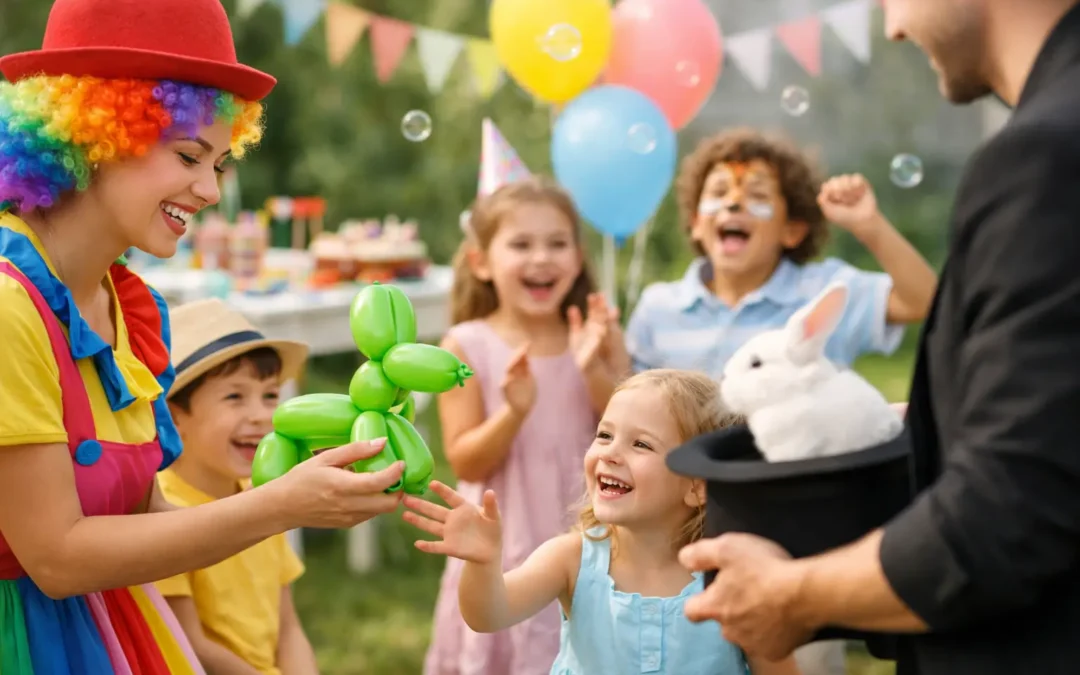
Magic also has range. A standard show can be a fantastic centerpiece on its own. If you want more wow factor, live animal appearances like a dove or bunny create those wide-eyed party moments children talk about for weeks. If you want the experience to keep going after the applause, a beginner lesson and take-home trick bags turn the entertainment into a memory kids can actually carry home.
That blend of spectacle and participation is hard to beat. It feels special, but it is still easy for the host.
How do you entertain children’s parties in a small space?
Parents often assume they need a giant backyard or rented venue to pull off a fun event. You really don’t. Some of the best children’s parties happen in living rooms, community rooms, and small event spaces.
The trick is choosing entertainment that fits the room instead of fighting it. Big running games in a tight indoor space can become stressful fast. A guided performance, interactive magic show, storytelling act, or seated participation activity usually works better. Kids still get the excitement, but you avoid the furniture obstacle course.
Small spaces can actually help if the entertainment is built for close interaction. Children feel more connected, they can see the action clearly, and the experience feels personal. You do not need more square footage. You need the right format.
What parents should look for in a performer
Not every entertainer who can do tricks can handle a children’s party. Those are two very different skills. Parents should look for someone who knows how to read the room, adjust to different ages, keep the mood upbeat, and stay calm when real-life party moments happen.
Professionalism counts too. You want someone who shows up on time, communicates clearly, and understands that your event is not a rehearsal. Safety, friendliness, and age-appropriate humor matter just as much as talent.
The sweet spot is a performer who feels warm and approachable while still being fully in command of the room. That combination helps children relax and helps parents trust that the entertainment is in good hands. In Houston, that’s exactly why many families turn to Magic Lanny for parties that feel lively, easy, and unforgettable.
A simple formula that works
If you’re still staring at your calendar and wondering what to book, keep it simple. Choose one main entertainment feature that can truly hold attention. Build the party around that. Add food, cake, and room for photos and conversation. That is usually more than enough.
You do not need a complicated production to create a great children’s party. You need laughter, participation, a few surprise moments, and an experience that lets everyone enjoy the celebration instead of managing it minute by minute. When the kids are fully engaged and the adults get to breathe, that’s when the real magic happens.
If your goal is a party people talk about on the drive home, pick entertainment that brings the whole room together and makes the birthday child feel like the star. That’s the kind of fun that lasts longer than the frosting.