
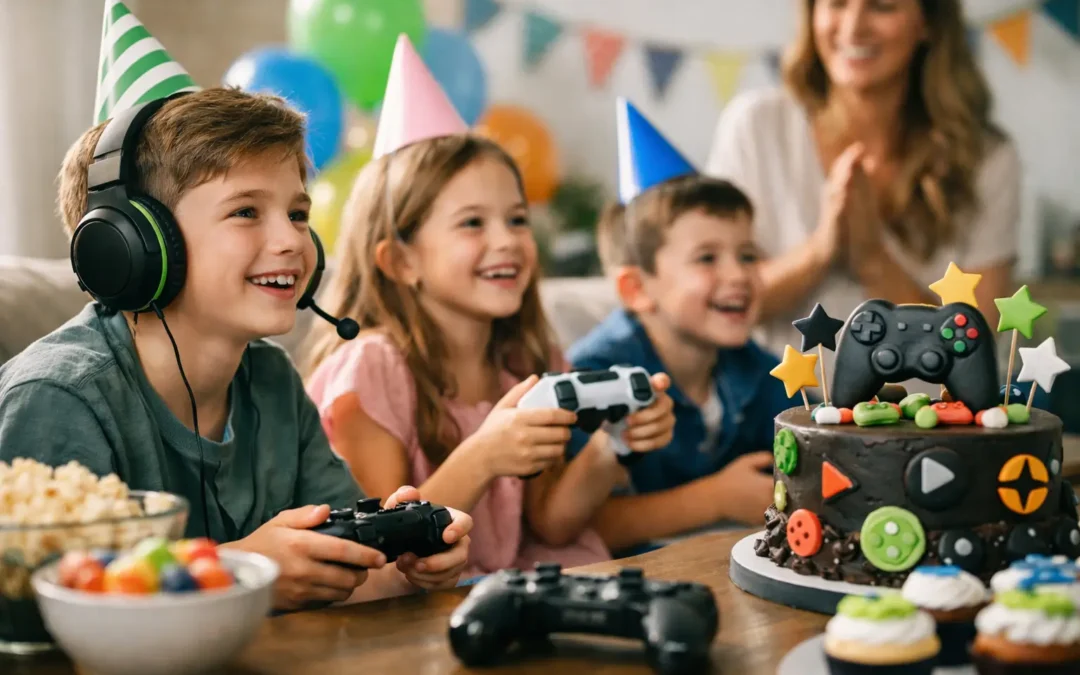
The moment kids start running laps around the cake table, most parents ask the same question: how do you keep this party fun without turning your house into total chaos? If you’re wondering how to entertain kids birthdays in a way that feels exciting, age-appropriate, and actually manageable, the answer is not more stuff. It’s better pacing, the right kind of interaction, and one or two moments the kids will talk about all week.
A great birthday party does not need a dozen complicated stations or a Pinterest command center. What it does need is a plan that matches the age of the children, the size of the group, and the energy in the room. When entertainment works, kids stay engaged, parents relax, and the birthday child feels like the star instead of getting lost in the commotion.
How to entertain kids birthdays without overcomplicating it
The biggest mistake parents make is assuming entertainment has to fill every second. It doesn’t. Kids need rhythm more than constant stimulation. A party that flows well usually has three parts: arrival and free play, one strong featured activity, and a simple wind-down before cake and presents.
That featured activity matters most. It should be something kids can watch, join, and remember. For younger children, that usually means entertainment with a lot of audience participation, movement, and visual surprises. For older kids, it helps to include something a little more interactive or skill-based so they feel involved instead of talked at.
This is why live performers tend to work so well at birthdays. A good one does more than fill time. They guide attention, manage excitement, and turn a noisy room into a shared experience. That is a huge win when you’re hosting a mix of personalities, ages, and attention spans.
Pick entertainment that fits the age group
Not all birthday entertainment lands the same way with every group. What delights a four-year-old might get eye rolls from a nine-year-old. On the other hand, entertainment designed only for older kids can lose the little ones in the first five minutes.
For ages 3 to 5, simple is better. Bright visuals, silly comedy, repetition, and easy call-and-response moments go a long way. Kids this age love to help, laugh loudly, and react big. They do not need a complicated storyline. They need something they can follow and join.
For ages 6 to 8, the sweet spot is high participation with a little more structure. This is often the perfect age for magic, games, and interactive comedy because they want to be part of the action. They still believe in wonder, but they also love the feeling of figuring something out or being the helper in front of the group.
For ages 9 to 12, you want entertainment that respects their growing independence. They may still love surprise and laughter, but they also appreciate humor that feels smart and moments that feel a little special. Hands-on activities, beginner lessons, challenge-based games, or a performance that invites them in without talking down to them can work beautifully.
If your guest list spans multiple ages, go for entertainment that can hold both kids and adults. That’s the sweet spot for family parties because nobody feels left out, and the room stays together instead of splitting into mini groups of boredom and mischief.
The best parties give kids a role
Children are much easier to entertain when they get to do something, not just sit and watch. That does not mean every activity has to be a full-body obstacle course. It just means participation should be built in.
A birthday party gets stronger the second a child gets called up to help with a trick, answer a funny question, wave a magic wand, or cheer for the birthday kid. Participation creates investment. Kids pay attention longer when they feel like they are part of what is happening.
This is one reason interactive magic is such a natural fit for birthdays. It combines spectacle with structure. There is laughter, surprise, and real audience involvement, but there is also a clear beginning, middle, and end. Parents love that because the energy feels fun without feeling out of control.
In Houston, where parties often include cousins, neighbors, grandparents, and friends from school all in one place, entertainment that works across ages is especially valuable. A room full of children can be wonderfully loud, but it helps when someone knows how to steer that energy instead of fighting it.
Keep the schedule loose, but not random
A birthday party should feel joyful, not military. Still, kids do better when there is a loose order to the fun. If guests arrive and nothing is happening, children start making their own excitement. You already know where that can lead.
Start with a low-pressure arrival window. Let kids mingle, color, snack lightly, or explore while everyone settles in. Then bring in the main entertainment before attention gets too scattered. After that, move into cake, singing, and presents while the party still has momentum.
Try not to save your best entertainment for the very end. By then, kids are often sugared up, tired, or getting picked up. Earlier is better for focus and for photos. The birthday child is usually in a happier mood too.
If you are hosting at home, think about the space from a kid’s-eye view. Can everyone see? Is there enough room to sit? Are distractions like toys, bounce houses, or screens going to compete with the activity? Sometimes the easiest way to improve party entertainment is simply to create one clear focal area.
What actually keeps kids engaged
Parents often worry that children will get bored. Usually, boredom is not the real problem. Confusion is. If kids do not know where to look, what to do, or when something starts, they drift.
The best entertainment for birthdays has clear cues. It starts strong, changes pace when attention dips, and includes moments of anticipation. A funny reveal. A child volunteer. A surprise appearance. A skill they get to try themselves. Those little peaks are what keep a room connected.
There is also real value in hiring someone whose entire job is reading the crowd. That is different from setting out activities and hoping for the best. A professional entertainer knows when to speed up, slow down, get the shy child involved, and help the birthday kid feel special without overwhelming them.
That kind of experience can make the difference between a party that feels hectic and one that feels easy. Easy is underrated. Easy means you get to enjoy your own child’s party.
If you want low-stress entertainment, go for one memorable centerpiece
A lot of families think they need party games, crafts, inflatables, face painting, and music just to keep kids happy. Sometimes that works. Sometimes it creates a party that feels crowded, expensive, and oddly scattered.
One memorable centerpiece often does more. A live magic show is a great example because it gives children a shared moment. Everyone laughs at the same joke. Everyone gasps at the same trick. Everyone watches the birthday child become the hero of the show. That kind of memory sticks.
Some families want to make it even more special with extras like a live bunny or dove appearance, or a beginner magic lesson where kids learn a simple trick and take home a little piece of the experience. Those upgrades can be a smart choice if your child loves hands-on fun or you want the entertainment to carry beyond the performance itself.
If that sounds like your kind of party, Magic Lanny offers interactive birthday entertainment in Houston that keeps kids engaged and gives adults a show to enjoy too. That mix matters more than people think. When the grown-ups are smiling, the whole party feels better.
The real goal is not constant motion
When people search for how to entertain kids birthdays, they are usually trying to prevent meltdowns, boredom, and mayhem. Fair enough. But the real goal is not to keep children busy every second. It is to create a party where fun feels shared, the birthday child feels celebrated, and you are not exhausted before the candles are even lit.
That usually comes from choosing entertainment with personality, structure, and room for kids to participate. A strong party does not need to be bigger. It needs to be smarter.
So if you are planning the next birthday and feeling the pressure to top last year, give yourself a break. Pick one thing that will really land, build the party around it, and let the laughter do the heavy lifting.