
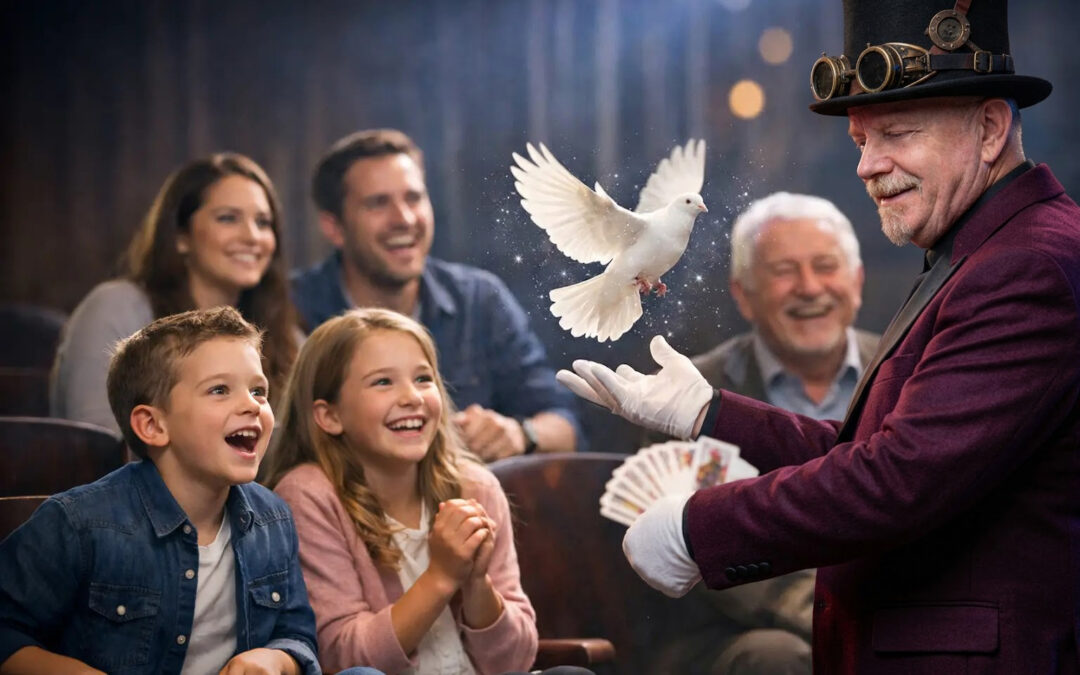
You can spot the question behind almost every party inquiry in about ten seconds: what age likes magic shows, really? Parents want to know if the birthday child will be thrilled, if the younger siblings will sit still, and if the older kids will roll their eyes or lean in. Fair question. The good news is that a well-run live magic show is one of the few party activities that can genuinely work across a wide age range – but the best fit depends on how interactive the show is and how it’s tailored to the crowd.
What age likes magic shows best?
If you want the shortest honest answer, it’s this: most children enjoy magic shows from about age 4 through 10, and many still love them beyond that when the performance is smart, funny, and hands-on. That’s the sweet spot for birthday parties because kids in those years are old enough to follow what’s happening, young enough to enjoy the mystery, and excited enough to participate without needing to be convinced.
That said, there isn’t one magic-show age that works in exactly the same way for every child. A shy 5-year-old may love watching but not volunteering. A confident 9-year-old may want to be part of every trick. An 11-year-old might act too cool for magic until the show gets genuinely surprising and suddenly they’re paying close attention. The real answer is less about one perfect age and more about whether the performer knows how to read the room.
Ages 3 to 4 – curious, wiggly, and easily delighted
Preschoolers can absolutely enjoy a magic show, but this is where experience matters a lot. Kids this age love bright visuals, silly moments, repeated jokes, and simple surprises they can react to right away. They do not love long explanations, subtle setups, or anything that asks for extended patience.
For a 3- or 4-year-old party, the best magic has a playful rhythm. Things appear, disappear, pop out, and get big reactions fast. Animal appearances, goofy comedy, and audience call-backs usually land well because little kids like being part of the noise and fun.
The trade-off is attention span. At this age, shorter and more visual is better. If the show drags, you lose them. If it stays interactive and age-appropriate, they become one of the most joyful audiences you’ll ever see.
Ages 5 to 7 – the birthday party sweet spot
For many families, this is the golden age for magic shows. Kids from 5 to 7 are old enough to understand the basic structure of a trick and young enough to be completely thrilled by it. They love the feeling that something impossible just happened right in front of them, and they love helping make it happen.
This is also the age when audience participation becomes party gold. Children want to shout the magic words, point out the silly mistake, and come up to help the magician. When a show lets them do that, it doesn’t feel like background entertainment. It becomes the event everyone talks about afterward.
If you’re planning a birthday party and wondering what age likes magic shows enough to stay engaged from start to finish, this group is usually the easiest yes. They’re responsive, expressive, and ready to have fun.
Ages 8 to 10 – still a huge win with the right style
Some parents worry that kids around 8, 9, or 10 have outgrown magic. Usually, they haven’t outgrown magic at all. They’ve outgrown babyish entertainment.
That distinction matters.
Older elementary-age kids still enjoy being amazed, but they want a performer who respects their intelligence. They like stronger surprises, cleaner pacing, and humor that feels a little sharper. They may try to figure out the trick, which is actually part of the fun. A good magician knows how to turn that energy into engagement instead of a battle.
This is also a great age for more advanced participation. Kids love being chosen as helpers, learning a simple trick, or getting a behind-the-scenes feeling without actually giving away the mystery. When the experience includes a beginner magic lesson or take-home trick bags, it often becomes even more memorable because these kids enjoy not just watching magic, but trying it themselves.
Ages 11 and up – it depends on presentation
Preteens and older kids are the group where style matters most. They can absolutely love a magic show, but only if it doesn’t feel too little-kid. If the performer relies only on silly bits designed for preschool laughter, older kids will check out fast. If the show includes strong visual magic, clever comedy, and confident audience control, they often become one of the most rewarding audiences in the room.
At this age, kids appreciate being surprised for real. They want the impossible moment, not just the goofy setup. They also enjoy interactive comedy that lets them feel included without being embarrassed.
For mixed parties where the guest list includes older siblings or cousins, a family-friendly magician with broad appeal usually works better than entertainment aimed at one narrow age band. That’s how you keep younger kids delighted while giving the older ones enough to stay interested.
What age likes magic shows at family events?
Family events are a little different from birthday parties because the audience usually includes toddlers, school-age kids, teens, and adults all at once. In that setting, the question changes from what age likes magic shows to what kind of magic show works for everybody.
The answer is interactivity.
A strong family show gives little kids visual fun, older kids a challenge, and adults enough humor and surprise that they’re not just standing around waiting for cake. That matters more than many hosts realize. When the adults are laughing too, the whole event feels more alive.
This is one reason live magic keeps working so well for parties, churches, schools, and community events. It creates shared moments. A bounce house is fun, but it doesn’t gather everybody into one experience. A good magic show does.
Signs your child is a great fit for a magic show
Parents often assume the child needs to be extra outgoing to enjoy live entertainment. Not true. Some of the happiest kids at a magic show are the ones sitting wide-eyed in the front row, soaking in every second.
Your child is probably a great fit if they enjoy pretend play, surprises, jokes, animals, audience games, or getting involved in group activities. Kids who like to perform may jump at the chance to volunteer. Kids who are more reserved may still love watching the action from their seat.
The key is choosing entertainment that doesn’t put pressure on children to act a certain way. The best shows make room for different personalities while keeping the energy upbeat and welcoming.
When magic may not be the best choice
There are a few situations where magic might not be the perfect centerpiece. If your group is made up mostly of teens who want a hangout-style party, they may prefer music, games, or something more independent. If the party space is extremely chaotic with constant movement and no place for guests to gather, a show can be harder to pull off well.
Even then, it’s not always a no. It may just mean the performance needs to be shorter, more interactive, or structured differently. That’s why experienced entertainers ask questions about age range, party size, and setting before recommending a package.
Choosing the right show for your child’s age
If your guests are mostly ages 4 to 7, a lively, visual, comedy-filled performance is usually the home run. If your crowd skews older, look for a show with stronger audience interaction and smarter pacing. If you’re hosting a mixed-age family event, choose entertainment designed to keep both children and adults engaged.
Extras can make a difference too. Live animals tend to be a big hit with younger children and families because they add excitement and photo-worthy moments. A beginner magic lesson can be especially popular with elementary-age kids who want to do more than just watch. Those little details can turn a good party into the one people keep talking about.
That’s why so many Houston-area families book interactive performers like Magic Lanny for birthdays and celebrations. The goal isn’t just to fill time. It’s to create laughter, participation, and those priceless moments when the whole room reacts together.
So, what age likes magic shows? More ages than most people think. If the show is engaging, funny, and built for real family audiences, magic can win over preschoolers, delight elementary-age kids, and even pull adults right into the fun. The best party entertainment doesn’t just match an age group – it makes everyone in the room feel part of something special.