
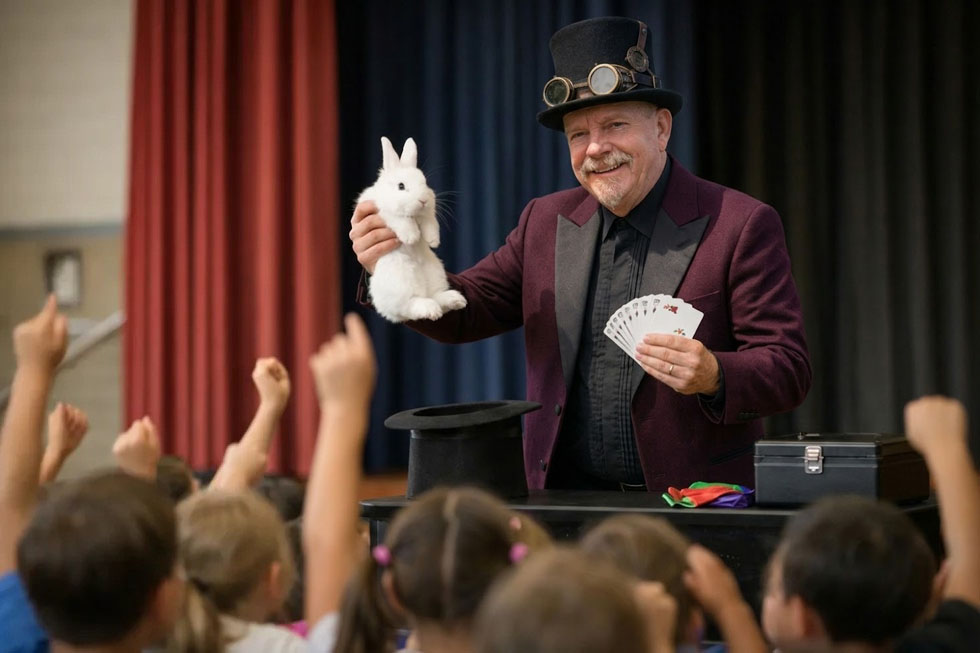
Picture a cafeteria full of students five minutes before an assembly starts. Teachers are hoping for calm. Administrators are hoping for a message that sticks. Kids are hoping it is not another talk they have to sit through. A strong school assembly magician example works because it meets all three goals at once – it grabs attention fast, keeps students involved, and leaves the room buzzing for the right reasons.
That is why magic works so well in schools when it is done by the right performer. A school assembly is not the same as a birthday party, and it is definitely not the place for random tricks stitched together with noise and chaos. Schools need a show with structure, clean humor, audience participation, and a performer who can read a room full of children in seconds.
What a good school assembly magician example really looks like
The best school assembly magician example is not just about fooling the audience. It is about managing energy. In a school setting, that matters more than almost anything else. A magician has to hold the attention of a large group, make students feel included, and keep the experience age-appropriate from the first laugh to the final applause.
A typical successful assembly show starts with a visual effect that gets instant focus. That opening matters because students decide very quickly whether they are in or out. If the first minute lands, the rest of the show has room to breathe. If it drags, teachers start redirecting and the room gets harder to control.
From there, the show should move into interactive routines that bring up volunteers without putting them on the spot in a mean or awkward way. Kids love being part of the magic. They remember the moment their classmate helped make something vanish, appear, or change. At the same time, the performer has to protect that child’s confidence. That balance is what separates a polished school entertainer from somebody who just knows tricks.
Why schools choose magic for assemblies
There are plenty of assembly options, so why does magic keep showing up on shortlists? Because it gives schools something many programs struggle to deliver – attention without a fight. Students want to watch. They want to guess. They want to laugh. That built-in curiosity makes it easier to weave in themes like reading, character, kindness, safety, or positive choices.
That does not mean every school magic show has to be heavily educational. Sometimes the goal is simply to reward students, celebrate a milestone, or bring families together for a special event. In those cases, fun is not a bonus. Fun is the point. A great assembly magician can still keep things organized and purposeful without making the event feel like a lecture wearing a cape.
There is also a practical advantage. Magic is flexible. It can work in a gym, cafeteria, library, multipurpose room, or stage area. It does not require every child to sit still in total silence to be effective. In fact, a little laughter and response usually makes the show better.
The ingredients that make an assembly show successful
The first ingredient is clean comedy. School audiences often span a wide range of ages, and the humor has to work for all of them. Younger students need clear visual fun. Older kids want wit and a little surprise. Teachers and staff appreciate a performer who can be funny without being edgy, sarcastic, or distracting.
The second ingredient is participation. Not every child will come onstage, but the whole room should feel involved. That can happen through call-and-response moments, group reactions, and routines where everyone gets to play along from their seat. When students feel included, behavior usually improves because they are part of the experience instead of just watching from the outside.
The third ingredient is pacing. Assemblies go sideways when the entertainer loses momentum. Long setup times, too much talking, or repeated bits that all feel the same can make even a talented magician seem flat. A school crowd needs variety. Fast visual moments, then a comedy beat, then volunteer interaction, then a bigger payoff. That rhythm keeps the room engaged.
And the fourth ingredient is professionalism. This may not sound flashy, but schools notice it right away. Showing up on time, understanding the schedule, adapting to the space, working with staff, and keeping the event stress-free are part of the performance too. For school organizers, that reliability is every bit as valuable as the tricks themselves.
A school assembly magician example for different age groups
Elementary schools are usually the sweetest spot for a magic assembly. Students are expressive, eager to participate, and ready to believe something amazing just happened right in front of them. In this setting, colorful props, funny byplay, and lots of volunteer moments tend to work beautifully.
For older elementary and middle school students, the style may need to shift a bit. They still enjoy magic, but they are more aware, more verbal, and quicker to test a performer. The show has to feel smart and confident. If it talks down to them, they will pull away. If it respects their age and keeps things moving, they are right there with you.
Mixed-age family school events are a category of their own. These can be some of the most fun shows because parents, siblings, and staff are all part of the crowd. The challenge is making sure the material entertains adults too. The best family-friendly magician can do exactly that – keeping kids laughing while giving grown-ups plenty to enjoy.
What school organizers should look for before booking
When schools evaluate entertainment, the question is not just, “Is this performer talented?” It is, “Can this person handle our audience?” Those are two different things. A strong performer for private parties is not automatically a strong performer for assemblies.
Ask whether the show is designed for large groups. Ask how audience participation is handled. Ask whether the humor is clean and age-appropriate. Ask how much setup space is needed and whether the performer can adapt to your room.
It also helps to know the goal of the event. Is this a reward assembly, a family night, a character-building program, or a seasonal celebration? The answer shapes the best kind of show. Some schools want a themed message. Others simply want a high-energy performance that students will talk about all week. Neither is wrong, but clarity helps everybody.
Why interactive magic leaves a bigger impression
Students remember what they help create. That is one reason interactive magic tends to land so well in schools. It turns spectators into participants, even when most of them stay in their seats. A room full of children saying the magic words together or reacting to a surprise reveal feels alive in a way many assembly formats do not.
It also creates shared memories. Teachers remember the laughter. Students remember the volunteer moments. Parents at family events remember that everybody was entertained at the same time, which is harder to pull off than it sounds. A good show does more than fill the schedule. It gives the school a moment people actually talk about later.
That is where an experienced family entertainer has an edge. Someone who regularly performs for children and mixed audiences understands how to keep excitement high without letting the room get out of hand. That blend of fun and control is the sweet spot.
One more thing schools often underestimate
A magician is not just performing tricks. In a school assembly, the performer is also leading the room. That means voice control, timing, crowd awareness, and the ability to shift gears quickly if the audience needs it. The show may look easy from the seats, but the skill behind it is a big part of what schools are really booking.
That is also why experience matters so much. A seasoned entertainer knows how to work with shy volunteers, energetic students, and changing room conditions without losing the crowd. If the microphone acts up or the space is tighter than expected, the right performer keeps the magic moving.
For schools and family events in the Houston area, that kind of interactive, laughter-filled experience is exactly why performers like Magic Lanny stand out. When the show is built for kids, polished for adults, and easy for organizers, everybody wins.
If you are looking at options and want a school assembly that feels exciting instead of obligatory, use this simple test: will the students be talking about it after lunch, and will the staff be glad they booked it? If the answer is yes, you are not just hiring entertainment – you are creating one of those school memories that actually sticks.