
A packed cafeteria, a restless group of kids, a fundraiser goal on the wall, and about 20 minutes before families start wondering if they should have just done another bake sale – that is exactly where the right entertainment can save the night. A strong school fundraiser magic show example is not just a show that gets applause. It is a show that helps schools bring families together, keeps the event moving, and turns fundraising into something people actually want to attend.
For schools, PTO leaders, church groups, and family event organizers, that difference matters. Nobody wants an activity that feels like homework with cupcakes. A magic show works when it gives students something exciting to talk about, gives parents a reason to stay, and gives organizers a simple event structure that does not create extra chaos.
What a school fundraiser magic show example should actually include
The best school fundraiser events are fun first and organized second – but still organized enough that adults do not end up herding 200 excited children with the energy of caffeinated squirrels. A good magic show fundraiser usually works because it has a clear flow. Families arrive, kids get excited right away, the entertainment starts on time, and the show becomes the centerpiece of the event instead of background noise.
A practical school fundraiser magic show example might look like this: the school sells advance tickets at a family-friendly price, offers a few sponsorships or VIP seating options, and uses the show as the headline attraction for an evening event. The magician performs a high-energy, interactive set with lots of audience participation, clean comedy, and visual moments big enough to play well in a gym, cafeteria, or multipurpose room. After the show, the school can add raffle drawings, concession sales, or a short paddle raise if the audience is already warmed up.
That order matters. If the fundraising ask happens after the room is laughing and engaged, families are usually more receptive. If the event starts with a long donation speech and no fun, attention disappears fast.
Why magic works better than many school fundraiser ideas
Schools have plenty of fundraising options, but not all of them create a real event. Product sales can raise money, sure, but they usually rely on families doing work outside school. Spirit nights depend on restaurant traffic. Auctions can be effective, but they take planning and often aim more at adults than children.
Magic shows have a different advantage. They are built for shared attention. Kids love the surprise, the silliness, and the chance to be called up front. Parents enjoy watching their children light up, and they get entertained too when the performer knows how to work the whole room instead of talking only to the kids. That matters for turnout because families are much more likely to buy tickets for something that sounds genuinely fun.
There is also a practical benefit. A live show gives the fundraiser a start time, an end time, and a reason to show up promptly. That structure helps schools sell the event as a complete night out instead of just another request for support.
A simple school fundraiser magic show example for elementary schools
If you are planning an elementary school event, keep it easy to understand and easy to promote. Picture this: doors open at 5:30 p.m., families check in, student artwork or sponsor tables line the entrance, and simple concessions are available before the show. At 6:00, the performance begins with upbeat music and a strong opening trick that immediately gets the room quiet.
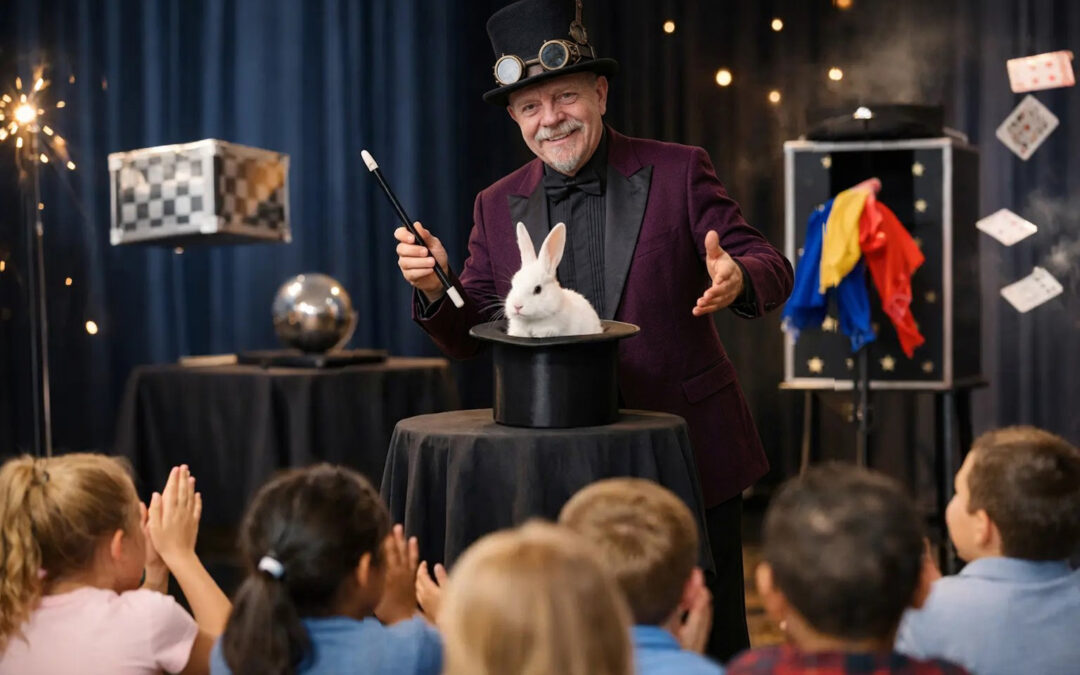
During the next 45 to 60 minutes, students become the stars. Volunteers come onstage. Teachers might get pulled into a funny bit. The magic is visual, interactive, and age-appropriate, with plenty of laughter and big reactions. If the show includes a dove or bunny, that creates an extra layer of excitement that younger audiences remember long after the event ends.
At the end of the performance, the emcee thanks families, announces raffle winners, and gives one final reminder about how the fundraiser supports the school. This format works well because the fundraising feels connected to a happy experience. Families are not just donating. They are attending something memorable.
How schools can make the event more profitable
The show itself can drive ticket sales, but the strongest fundraiser often includes a few extra revenue pieces around it. The key is keeping them simple. Too many moving parts can create more stress than money.
Ticket sales are the obvious starting point, and advance sales usually work better than relying on the door. Schools can also add concession stands with popcorn, drinks, and packaged snacks. Raffles tend to perform well because they are easy for families to understand and easy for volunteers to manage. Some organizers also secure event sponsors from local businesses that want visibility with school families.
There is a trade-off here. Adding extras can raise more money, but only if the school has enough volunteers to handle them. If the team is small, a clean ticketed event with one or two add-ons is usually better than an ambitious plan that becomes a mess by 5:45.
What to look for in the right magician
Not every magician is a fit for a school fundraiser. That is the honest part. Some performers are great in small birthday party living rooms but do not know how to hold a cafeteria full of kids. Others can do complicated sleight of hand but do not build the kind of family-friendly energy a school event needs.
For a fundraiser, the best performer is one who understands group dynamics. That means crowd engagement, strong microphone presence, clean humor, and enough experience to adapt when kids get excited or the room setup is less than perfect. It also helps when the show is built for all ages. Adults should not feel like they are just sitting through a children-only act.
Interactive entertainment tends to perform best because it keeps attention high and creates those moments families talk about later. A performer who brings audience volunteers onstage, gets teachers involved, and makes students feel part of the action can turn a standard fundraiser into a real school memory.
In the Houston area, that is exactly why many organizers look for entertainers who can handle both the fun and the flow of the event. A performer like Magic Lanny fits that need because the show is built around participation, family laughter, and easy-to-understand package options that help organizers match the event to their budget.
Planning details that make a big difference
Even a great show needs the right setup. Schools should think through seating, sound, and visibility before event night. A gym or cafeteria usually works well, but the audience needs a clear view. If the room is wide and flat, having the performance area slightly elevated can help. Good sound is essential too. Kids cannot stay focused if they cannot hear clearly.
Promotion matters just as much. Flyers sent home once are rarely enough. Schools usually get better attendance when they combine printed reminders, email blasts, social posts, and teacher mentions during the week leading up to the event. The message should be simple: fun family night, live magic show, easy way to support the school.
Timing also depends on the age group. Elementary families often do best with early evening start times. Older student groups may have a little more flexibility. If the event runs too late, younger children lose steam and parents start heading for the parking lot before the final applause.
When a magic show fundraiser is the best choice – and when it is not
A magic show fundraiser is a strong option when the school wants a community event with broad appeal. It works especially well for elementary schools, family nights, church schools, PTO events, and organizations trying to increase turnout, not just raise dollars from the same small group.
It may be less ideal if the school needs a very high-ticket donor event aimed mainly at corporate sponsors or major giving. In that case, a gala or auction might produce bigger individual donations. But for schools that want a fundraiser families can actually enjoy together, a live magic show is hard to beat.
That is really the heart of it. The best fundraiser is not always the fanciest one. Sometimes it is the event that makes children laugh, helps parents relax, and gives the whole school a reason to show up smiling. When fundraising feels like a celebration instead of an obligation, people remember it – and they come back for the next one.