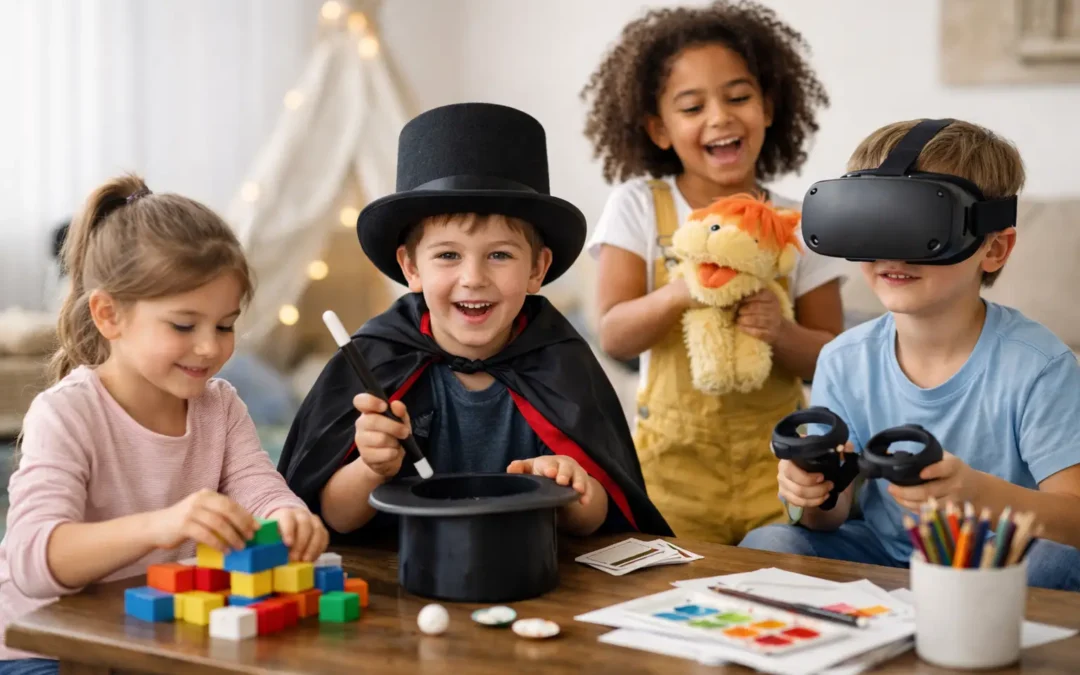
Rain is tapping the windows, the living room is filling up fast, and 15 excited kids have somehow found the loudest possible volume setting. This is exactly when the best indoor entertainers for kids stop feeling like a nice extra and start feeling like the smartest party decision you can make.
Indoor parties can be fantastic. They are weather-safe, easier to plan, and often more comfortable for younger children and grandparents alike. But they also come with one big challenge – kids need something real to focus on. Not background noise. Not a corner activity that gets ignored after eight minutes. You need entertainment that can take over the room in the best way, hold attention, and turn a busy house or event space into a place full of laughter instead of chaos.
What makes the best indoor entertainers for kids work?
Not every party act is built for indoor events. Some performers need a lot of room. Some are better in short bursts than full-group entertainment. And some look exciting online but struggle when they are face-to-face with a room full of wiggly six-year-olds.
The best indoor entertainers for kids usually have a few things in common. They can command attention without shouting. They keep the show moving. They involve the audience instead of talking at them. And they know how to adjust on the fly when a toddler wanders forward, a birthday child gets shy, or the room layout is less than ideal.
For parents, that last part matters more than people realize. A polished entertainer does not just perform. They help the event feel easier.
1. Interactive magicians
If you want one entertainer who can genuinely work for kids and adults at the same time, a magician is hard to beat. A good children’s magician does much more than pull out a few tricks. The strongest shows are packed with audience participation, comedy, surprises, and moments built around the birthday child.
Magic works especially well indoors because it creates a natural focal point. Kids sit down, lean in, and stay curious. That matters in homes, community rooms, school spaces, and church halls where there may not be much else competing for attention. If the magician adds interactive comedy, live animals, or even a beginner magic lesson, the experience feels even bigger without needing a bigger venue.
This is one of those categories where experience really counts. A magician who knows how to manage a room full of children is offering more than tricks. They are helping guide the entire party atmosphere.
2. Balloon artists
Balloon artists are a classic for a reason. Kids love watching something colorful take shape right in front of them, and there is a built-in souvenir at the end. Swords, flowers, monkeys, hats – the appeal is immediate.
That said, balloon entertainment depends on the style of event. If you want a flowing come-and-go activity, balloon twisting is great. If you want all the kids engaged at once for a full show experience, it may not carry the room the same way a performance-based entertainer would. It can also create lines, which some children handle better than others.
Still, for open-house parties or larger events where kids are moving between stations, balloon artists are a strong indoor choice.
3. Face painters
Face painting is popular because it makes children feel transformed. A butterfly, tiger, superhero, or glittery rainbow can become half the fun of the party. It also works well indoors because it requires very little performance space.
The trade-off is similar to balloon art. Face painting is more of an activity than a full-group entertainment centerpiece. It is excellent as part of a broader party plan, but usually not enough on its own if your goal is to keep a whole room engaged together.
For younger kids especially, it helps to choose an artist who works quickly and uses kid-friendly products. Speed matters when there are ten more children waiting in line and one parent checking the clock.
4. Puppet shows
Puppet shows can be charming, funny, and wonderfully age-appropriate for younger audiences. Preschoolers and early elementary kids often love the silliness and simple storytelling. In smaller indoor spaces, puppet shows can feel cozy and personal.
The key here is age range. A puppet act that delights four-year-olds may not do much for older kids unless the performer is especially funny and engaging. If your guest list includes a wide spread of ages, this option can be a little less flexible than magic or comedy-based interactive entertainment.
5. Character performers
Princesses, superheroes, and themed characters are a big hit when your child has a favorite world they want brought to life. For themed birthdays, this can create those wide-eyed moments parents remember for years.
Indoor character entertainment tends to work best when the performer brings structure with them – storytelling, games, songs, or interactive activities. Without that, the visit can feel short. A costume gets attention fast, but keeping attention takes skill.
If your child is deeply into a certain theme, this can be the perfect fit. If you are trying to entertain a mixed-age group for a full party, you may want something with broader appeal.
6. Kids comedy acts
A clean, family-friendly comedy act can be terrific indoors because laughter fills a room fast. The challenge is that comedy for children is a specialized skill. Jokes that work for adults do not always land with kids, and humor for kids can become noisy or silly in a way that loses control if the performer is not experienced.
The best children’s comedy acts usually blend physical humor, audience interaction, and a pace that leaves no dead spots. In practice, many of the strongest kid entertainers mix comedy with another skill, like magic, music, or puppetry, because that gives the show more variety.
7. Storytellers and interactive readers
For library events, schools, and calmer gatherings, a professional storyteller can be a lovely indoor option. A talented storyteller can pull children into a world with voice, movement, and audience participation.
This choice tends to work best for educational or low-key events rather than high-energy birthday parties. It depends on the mood you want. If your goal is cozy engagement, storytelling shines. If your goal is nonstop birthday excitement, it may feel a little softer than what the moment calls for.
8. Music and sing-along performers
Music entertainers can turn a room into a party very quickly. Singing, dancing, rhythm games, and movement songs are especially effective with younger children who need to move more than they need to sit still.
For indoor use, space matters. If the party room is tight, a high-energy music act can become a little chaotic unless it is very well managed. But in the right setting, it is joyful and memorable. This is often a great pick for toddlers, preschool parties, and early childhood programs.
9. Science entertainers
Science shows bring the wow factor in a different way. Kids get reactions, experiments, surprising visuals, and a little learning mixed into the fun. For school events and community programs, they can be a strong choice.
For birthday parties, this depends on the child. Some kids will absolutely love it. Others may prefer something more playful and less demonstration-based. The best science entertainers keep things highly interactive and age-appropriate so it feels exciting, not like classroom time showed up uninvited.
10. Art and craft party hosts
Craft hosts can be a smart indoor solution if you want kids settled at tables and focused on making something. It gives every child a take-home item and can work beautifully for smaller groups.
This option is less about performance and more about guided activity. That can be perfect for creative kids or quieter celebrations, but it usually will not create the same shared, laugh-out-loud group energy as a live show.
How to choose the right indoor entertainer
The best choice depends on your guest list, your space, and the kind of stress you are trying to avoid.
If you want everyone gathered, laughing, and engaged at the same time, choose a performer with a true show format. Interactive magicians are often the strongest fit here because they combine structure, comedy, and audience participation in a way that feels big even inside a modest room.
If your party is more casual and spread out, face painters and balloon artists can work beautifully. If your child is theme-focused, a character performer may be the obvious winner. If you are planning for a school or church audience, science shows, music acts, or storytelling might make more sense depending on the age group.
It also helps to ask practical questions before you book. How much space is needed? How long is the performance? Is the act designed for your child’s age? Will the entertainer handle a mixed-age audience? Do they bring everything they need? Parents do not need more surprises on party day, and not the fun kind.
Why interactive entertainment usually wins indoors
Indoor parties put a spotlight on engagement. There is less room for kids to scatter, which is great when the entertainer knows how to use that attention. It is not so great when they do not.
That is why interactive entertainment tends to outperform passive entertainment indoors. Kids want to help. They want to laugh, react, answer questions, and maybe even become part of the show. When a performer can turn that energy into something organized and exciting, the whole event feels more memorable.
That is also why so many families lean toward a magician for birthdays and family events. A strong magic show can feel like the main event, not just a side activity. And when it includes family-friendly comedy, audience participation, and a few jaw-dropping surprises, it gives parents something they want too – a room full of happy kids and a party that feels under control.
Around Houston, that is exactly why so many families look for a performer who can entertain the whole room, not just fill time. The best parties are not the ones with the most stuff. They are the ones where the kids are fully in the moment, the adults are smiling too, and the host gets to enjoy the fun instead of managing it every minute.
If you are planning an indoor celebration, think less about what sounds busy and more about what truly holds attention. That is where the magic happens.