
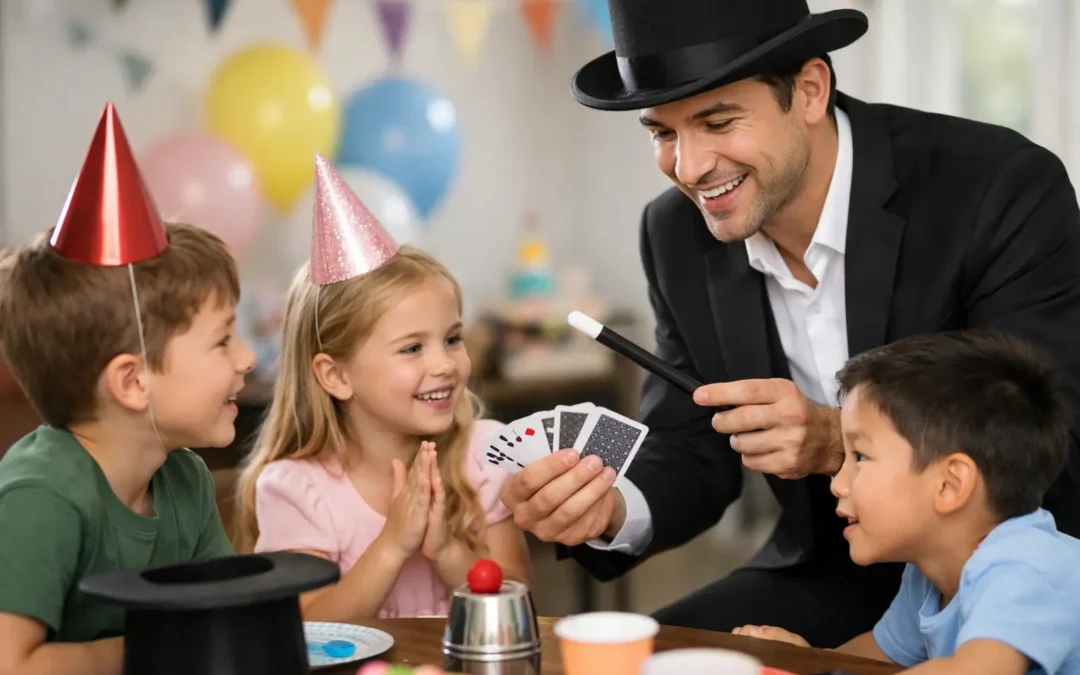
The best birthday party magic lesson example does not feel like school with a deck of cards. It feels like the moment every child at the party suddenly gets to join the show. One minute they are laughing at a magician’s silly mistake, and the next, they are holding a secret that lets them amaze Mom, Dad, grandparents, and every stuffed animal waiting at home.
For parents, that is a big win. The kids stay busy, the birthday child gets a special spotlight moment, and guests leave with more than a cupcake and a sugar rush. They leave saying, “Watch this!”
What Makes a Birthday Party Magic Lesson Work?
A great lesson is short, visual, and built around a trick children can actually perform. The goal is not to turn a room full of 6-year-olds into stage magicians before the ice cream melts. It is to give them a fun, age-appropriate mystery they can understand, practice, and proudly share.
The trick should have a clear magical ending. It also needs simple handling, no tiny pieces that disappear under the sofa, and a secret children can remember without needing a 40-page instruction manual. Best of all, the teaching needs comedy and participation. Kids learn faster when they are giggling.
At a birthday party, the lesson works especially well after the main interactive magic show. The children have already seen amazing things happen, joined in with magic words, and warmed up to the performer. Now they get their own chance to become the magician.
A Birthday Party Magic Lesson Example for Kids
Here is a simple example of how a beginner magic lesson can play out at a children’s party. The effect is a colorful “mystery ribbon” trick: a ribbon seems to jump from one hand to another after the children say the magic words.
The magician begins by showing a bright ribbon and announcing, very seriously, that it is an extremely rare Houston jumping ribbon. It only works when the audience uses its favorite fuel: loud, goofy magic words.
Of course, the first attempt goes wrong on purpose. The magician says the magic word too quietly, the ribbon does nothing, and the kids immediately know what to do. They call out a better magic word together. This gets the room involved before anyone has to learn a single step.
Then each child receives a take-home trick bag with the ribbon and a simple instruction card. The magician tells them, “You are now officially assistant magicians. That means you have two jobs: protect the secret and make your family yell, ‘How did you do that?’”
Step One: Show the Audience
Children learn to hold the ribbon up high and show both hands slowly. The magician reminds them that magic is easier to see when the audience can see everything clearly. This is a helpful lesson in performance, not just a trick.
The children practice saying something playful like, “This ribbon is going to travel without a car, a bike, or even a tiny airplane!” Everyone holds the ribbon the same way and gets ready for the big moment.
Step Two: Practice the Secret Move
The secret move is taught in tiny pieces, with the magician demonstrating first and then letting the children copy. The wording stays simple: “Pinch here, turn your hand, and keep your thumb sleepy.” A silly phrase gives kids something memorable to hold onto.
This is where a professional entertainer earns their keep. Some children will catch on instantly. Others may need an extra demonstration, a little encouragement, or a reminder that even famous magicians practice. No child should feel put on the spot for needing another try.
Step Three: Make the Magic Happen
Once everyone is ready, the magician counts down. The children point their ribbons toward the birthday child, shout the magic words, and make the ribbon appear to jump. The room reacts together, and the birthday child gets to be the first official audience member.
The magician can then invite a few volunteers to perform for the group. This part is optional. Some kids love the attention; others would rather save their debut for the kitchen table later. A good lesson gives both kinds of children a chance to succeed.
Step Four: Send Them Home Ready to Perform
Before the lesson ends, the magician recaps the trick one more time. The children repeat the three key actions aloud, then tuck their props safely back into their bags. The final reminder is always the same: do not tell the secret. Let people enjoy the mystery.
That little take-home trick bag matters. It gives the lesson a life beyond the party, especially when children get home and immediately gather their family for a living-room show. For many parents, that is the sweetest part of the package: the party excitement keeps going without requiring another hour of planning.
Why This Is Better Than a Complicated Trick
A trick with lots of steps may look impressive on paper, but it can lose a group of young children fast. Birthday parties are busy. There are balloons, friends, snacks, siblings, and a birthday cake calling everyone’s name. A lesson must meet the energy of the room instead of fighting it.
Simple does not mean boring. A well-chosen beginner trick has surprise, color, movement, and a funny story. It gives children a real secret while leaving enough space for personality. One child may perform it with a dramatic magician voice. Another may add a dance. A third may insist the ribbon works because their dog is magical. All of that is part of the fun.
It also helps the host. Rather than trying to organize another game or keep a dozen excited guests occupied between activities, parents get a focused, hands-on moment led by someone who knows how to manage a crowd with warmth and humor.
Matching the Lesson to the Birthday Group
The right trick depends on the children’s ages and the party setup. For preschoolers, the best lessons involve larger props, lots of repetition, and very little finger work. A color-changing picture, a disappearing scarf, or a silly wand routine can be a better fit than a trick requiring careful folds.
For children around ages 6 to 9, a ribbon, rope, card, coin, or simple prediction trick can be a great choice. They enjoy having a secret and are usually ready to follow two or three clear steps. For older kids, the magician can add a little more showmanship, such as teaching them how to create suspense before the reveal.
Group size matters, too. A small party may allow every child to perform individually. At a larger celebration, it is usually smoother to teach everyone together, choose a few eager volunteers for a quick stage moment, and make sure each child receives their own prop to take home.
What Parents Can Do to Help the Lesson Shine
Parents do not need to become assistant stage managers. A little preparation simply helps the magic land well. Leave a clear area where children can sit or stand with room to move, and schedule the lesson before cake if possible. Once frosting appears, attention tends to vanish faster than a coin in a magician’s hand.
It is also helpful to let the entertainer know the children’s age range and whether there are any special considerations. The more a magician knows about the group, the better the pacing, humor, and trick selection can be.
For a party that wants entertainment plus a memorable hands-on activity, a beginner lesson is a cheerful upgrade. Magic Lanny can pair an interactive show with a kid-friendly lesson and take-home tricks, giving guests a shared experience they can keep performing long after the candles are blown out.
The real magic is not just the secret move. It is watching a child stand a little taller, hold up a prop, and realize they can create a moment of wonder all by themselves.