
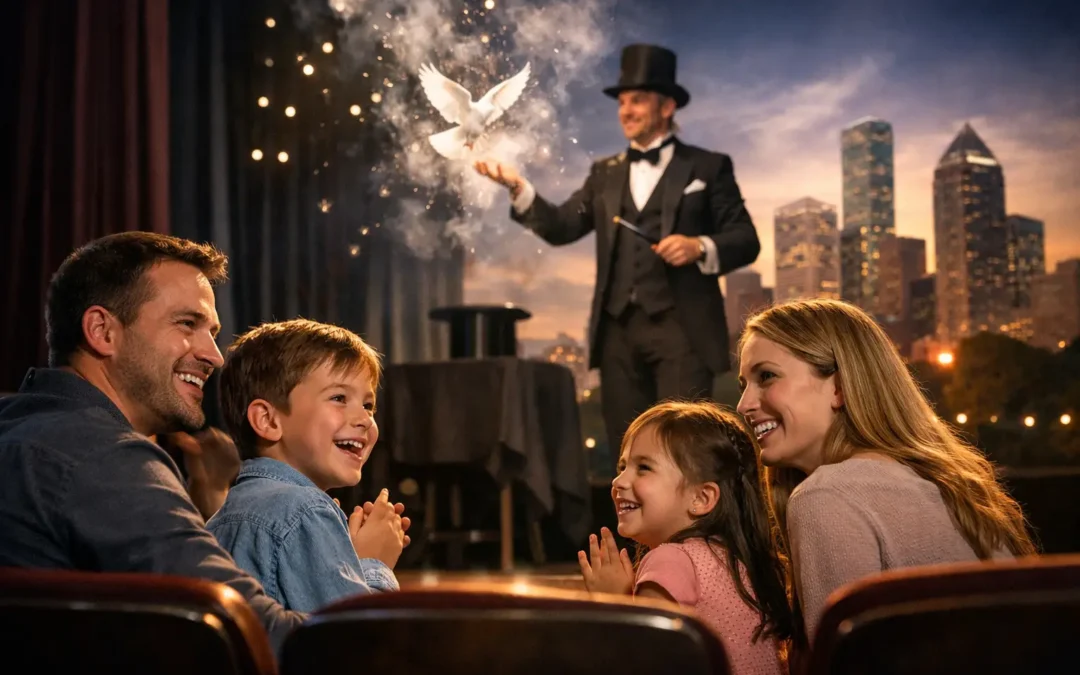
A living room full of excited kids can turn from cheerful to chaotic in about three minutes. That is why a great guide to family magic shows starts with more than tricks. The right magician gives children something to focus on, laugh about, and participate in, while adults get to enjoy the party instead of spending the whole time directing traffic.
For Houston birthdays, school events, church gatherings, and family celebrations, magic works because it brings different ages into the same moment. A child may be amazed when a silk scarf vanishes, while a parent is laughing at the joke that came just before it. The best shows do not talk at the audience. They make the audience part of the fun.
What Makes a Family Magic Show Work?
A family magic show is not simply an adult magic act with the jokes cleaned up. It is designed around short attention spans, big reactions, friendly comedy, and plenty of chances for children to help. Kids want to shout the magic words, make choices, wave a wand, and feel like they helped make the impossible happen.
That interaction matters even more than a complicated illusion. A flashy prop might get a quick gasp, but a child who gets invited up to help create the magic will talk about it all the way home. The rest of the group stays engaged because they are waiting to see what happens next and hoping they might be called on, too.
A strong family performer also knows how to read the room. A group of preschoolers needs a faster pace, larger visual magic, and very simple instructions. A group of second and third graders can enjoy playful puzzles, running jokes, and a little more mystery. Mixed-age crowds need a performer who can keep the children involved without leaving the adults on the sidelines.
The Comedy Should Be Kind
Family-friendly does not mean boring. It means the laughs come from silly situations, surprise, and audience participation rather than jokes that make a child feel embarrassed. The birthday child should feel like the star, not the target.
Ask a prospective magician how they involve volunteers. A professional should be able to explain how they choose helpers, keep everyone safe, and make each child look good in front of the group. That small detail makes a huge difference for shy children and for parents who want a joyful, low-stress celebration.
How to Choose the Right Show for Your Group
Start with the age range, guest count, and party setting. These three details shape nearly every other decision. A 30-minute show may be just right for a small preschool birthday, while a larger family event may need a longer performance with more audience interaction.
Think about where guests will sit. Magic is best when children can see the performer clearly and have a defined space to watch. A cleared corner of the living room, a community-room stage area, or a shaded patio can all work well. What matters is minimizing distractions. If the show is set beside a bounce house, buffet table, or open swimming pool, children may have trouble settling into the experience.
Also be realistic about the size of the group. Small gatherings can feel wonderfully personal, with lots of individual participation. Bigger groups can be high-energy and exciting, but they require a performer with the voice, staging, and crowd-management skills to reach the back row. It depends on the entertainer and the space, so share an honest guest estimate before booking.
Ask About the Details That Affect the Experience
You do not need a long interview, but a few practical questions help prevent last-minute surprises. Find out how much space the magician needs, whether an adult should be nearby for very young groups, and how early the performer arrives to set up. Ask whether the show is self-contained and whether music, tables, or access to an outlet are required.
If live animals are part of the show, ask how they are handled and what the children can expect. A dove appearance or a bunny can create a genuine wow moment, especially for younger guests. Still, animal-inclusive entertainment is not the best fit for every venue. Some locations have restrictions, and some children have allergies or fears. A good entertainer will be straightforward about those considerations.
Why Participation Beats Passive Entertainment
Parents often book entertainment because they want to fill an hour. The better goal is to create a shared memory. That happens when children are not just watching from the floor but chanting, clapping, guessing, and helping with the magic.
Participation also gives the party a helpful rhythm. Guests arrive, get settled, enjoy the show together, and then move naturally into cake, presents, or another activity. Instead of trying to invent games for a room of energetic kids, the host has a built-in centerpiece that holds attention.
Adults benefit, too. A skilled family magician knows that parents, grandparents, and older siblings are in the room. When the comedy has layers and the surprises are genuinely surprising, grown-ups are entertained instead of simply supervising. That is one reason magic is such a smart choice for a party with cousins, neighbors, and guests of different ages.
Picking a Package That Fits the Party
Not every celebration needs the same kind of magic. A standard interactive show is often the right choice when you want a lively centerpiece that keeps children laughing and involved. For families looking for an extra dose of wonder, a package with a dove and bunny can add a memorable visual moment.
A beginner magic lesson can be especially fun for school-age children who love knowing how things work. It changes the experience from watching magic to trying it themselves. Take-home trick bags can keep the excitement going after the party, but consider your schedule. If guests need to leave immediately after cake, a full lesson may feel rushed. If the party has room for a calmer activity after the main show, it can be a terrific fit.
At Magic Lanny, these options are built around the same goal: giving kids a chance to laugh, participate, and feel the magic up close. The best package is not always the biggest one. It is the one that matches your guests, your timing, and the kind of memory you want to create.
Plan the Show at the Right Time
For most children’s parties, schedule the magic after guests have arrived but before cake and gifts. This gives late arrivals a little cushion and helps you gather everyone before sugar, presents, or outdoor activities pull attention in different directions.
A common party flow is welcome time first, magic next, then food or cake. If you are hosting a two-hour party, placing the show about 20 to 30 minutes after the start often works beautifully. For younger children, avoid scheduling it during naptime or too close to the end, when tired guests may struggle to sit and watch.
Let families know there will be a show. A simple note on the invitation helps guests arrive on time, and it creates anticipation before the party even begins. You do not need to reveal every surprise. A little mystery is part of the fun.
Make the Room Easy for Magic
Your setup does not need to be fancy. Clear enough floor space for the performer, place children where they can see, and leave a comfortable viewing area behind them for adults. If possible, keep food and drinks away from the performance spot. Fewer distractions mean more laughter and better photos.
For outdoor events, shade is your friend. Bright sun can make it hard for guests to see visual magic, while wind can affect lightweight props. A covered patio or tented area is usually more reliable than an open lawn. Have a weather backup plan for Houston’s sudden rain, heat, or humidity.
Most of all, give yourself permission to enjoy the show. You hired entertainment so you would not have to be the entertainer. Put down the hosting checklist for a few minutes, watch your child’s face when the impossible happens, and let the room fill with the kind of laughter that makes a party feel truly special.