
A room full of excited kids can turn from adorable to absolute chaos in about seven minutes. That is why parents keep asking how to keep party kids engaged without spending the whole event playing traffic cop, cutting arguments short, and wondering why the cake somehow happened before the games.
The good news is that keeping kids focused at a party is not about filling every second. It is about giving them the right kind of fun at the right time. When the flow works, kids stay happy, grown-ups relax, and the party feels less like crowd control and more like an actual celebration.
How to keep party kids engaged starts with pacing
Most party problems are really pacing problems. If kids have too much unstructured time, they create their own entertainment, and that does not always go well for your furniture, your decorations, or your sanity. If the party is over-scheduled, they get restless and stop listening.
A better approach is to think in short blocks. Kids respond well when one fun thing leads naturally into the next. Arrival time can be loose and social, then you shift into an activity, then a snack, then a bigger centerpiece moment, then cake and gifts or goodbyes. That rhythm matters more than having a giant list of ideas.
For younger kids, attention spans are shorter, so transitions need to happen before boredom shows up. For older kids, the activity itself needs more challenge or participation. A group of five-year-olds may be thrilled with movement, music, and silly surprises. A group of nine-year-olds usually wants something more interactive, competitive, or impressive.
Build the party around one strong anchor activity
If you are trying to figure out how to keep party kids engaged, start by choosing one main event that can hold the room. This is the piece that gives the party structure and gives kids something to look forward to.
That anchor could be a live interactive show, a guided activity, a scavenger hunt, a craft station with real direction, or a group game led by someone who knows how to work a crowd. The key word here is led. Kids stay engaged longer when there is a clear host, a little suspense, and plenty of chances to participate.
This is where many parties go sideways. Parents often assume a pile of toys, a bounce house, or open play will carry the whole event. Sometimes it does for a while. But open-ended play can split the group, create little conflicts, and leave shy kids standing on the edges. A shared experience works better because it brings everyone into the same moment.
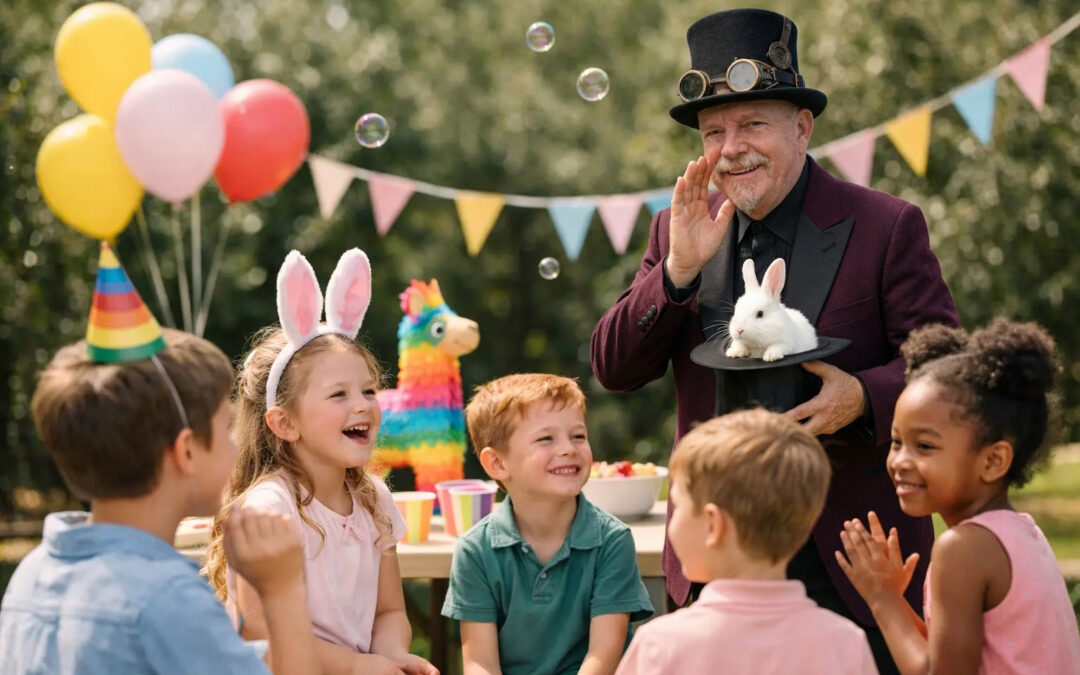
An interactive magic show is a great example of a strong anchor because it blends surprise, laughter, and participation. Kids are not just watching. They are helping, reacting, volunteering, and staying curious about what happens next. Better yet, adults usually enjoy it too, which is rare enough to deserve a round of applause.
Don’t make the schedule too front-heavy
One common mistake is putting all the exciting stuff at the beginning. Kids arrive buzzing with energy, so it feels natural to launch straight into the biggest activity. But if the first half is packed and the second half drifts, you will feel the difference immediately.
Instead, let the party build. Give guests a few minutes to arrive, settle in, and connect. Then move into something simple before the headliner moment. Save a high-interest activity for the middle, when everyone is present and ready to focus.
This also helps late arrivals. Nothing derails momentum like repeating instructions or stopping the fun every three minutes because another guest just walked in holding a gift bag and looking confused.
Give kids jobs, not just entertainment
Children are more engaged when they feel included. That does not mean putting them in charge of the party, which sounds brave and is usually not wise. It means giving them ways to participate.
Let kids volunteer during games. Ask for helpers. Create moments where they can respond, guess, cheer, or take turns. Even simple roles, like line leader, prize helper, or official birthday song starter, can make a child feel involved.
This matters even more for shy kids. Not every child wants to be the center of attention, but many still want a place in the action. A good entertainer or host knows how to invite participation without pressure. That balance makes the whole room feel more comfortable.
Match the energy level to the moment
Not every part of a party should be loud and wild. If everything is at full volume from start to finish, kids burn out fast. The best parties have variety.
Think of energy like waves. Start light, build excitement, then give the group a chance to reset. Snacks, cake, and seated activities can work as natural pauses. Then you can ramp things back up again with something interactive.
This is especially helpful for mixed-age groups. Little kids may need calmer moments sooner, while older kids can keep going. A varied pace gives both groups something to enjoy without making the event feel disjointed.
Use entertainment that works with kids, not against them
Some activities sound great on paper but are hard to manage in real life. Complicated crafts can frustrate younger kids. Long game instructions lose the room. Activities with one winner and lots of waiting can create tears, complaints, or both.
The best entertainment keeps children moving, responding, and laughing without asking too much of them all at once. It should be easy to join and rewarding to watch. It should also be flexible enough to handle different personalities in the room.
That is why live performers who specialize in family events can make such a difference. Someone experienced knows how to read a crowd, shift gears when attention dips, and keep the birthday child feeling special without leaving the rest of the group behind. At a great party, the entertainment is not just a time filler. It becomes the memory everyone talks about on the drive home.
Plan for the age range you actually have
A party with all six-year-olds is one thing. A party with toddlers, big kids, and cousins up to age twelve is a totally different circus, and yes, sometimes an actual circus might seem easier.
When your age range is broad, choose activities with layers. Visual entertainment works well because younger kids can enjoy the spectacle while older kids stay interested in the humor, mystery, or challenge. Audience participation also helps because children can engage at different levels.
If you know there will be very young children, build in space for them to watch without pressure. If older kids are coming, avoid anything that feels too babyish. They do not have to be the main audience, but they do need enough fun to stay connected instead of drifting off to someone’s game console in the other room.
Keep transitions smooth and obvious
A lot of party energy gets lost in the in-between moments. Kids are having fun, then suddenly an adult announces cake from across the room, nobody listens, and five minutes later half the group is still doing something else.
Clear transitions help more than most people realize. Use a friendly but confident voice. Give a simple countdown. Tell kids what is happening next so the shift feels exciting instead of abrupt.
This is another reason hosted entertainment is so effective. A performer who can guide the room creates momentum from one moment to the next. The kids know where to look, what to expect, and when to join in.
Small extras can stretch the fun
If you want the engagement to last beyond one performance or activity, think about take-home or hands-on extras that continue the experience. A simple magic lesson, beginner trick bag, or themed favor with a purpose can keep the excitement going after the main event ends.
That kind of add-on works especially well because it gives kids something to do, not just something to collect. There is a big difference between a favor bag that gets forgotten in the car and one that sparks a mini performance in your living room later that night.
For families who want easy and memorable, this is where package-style entertainment can really shine. A standard interactive show may be exactly right for one party. Another family may want the bigger wow factor of live animals or a premium experience with a hands-on lesson built in. It depends on your space, your budget, and the age of your guests. The important part is choosing something designed to hold attention, not just fill a slot on the schedule.
The host should not have to carry the whole party
Parents already have enough to manage. Greeting guests, handling food, taking photos, and making sure the birthday child feels special is plenty. If you are also trying to run every game and hold every kid’s attention yourself, the party can start to feel like work.
The smartest way to keep kids engaged is to set up a party that does some of that work for you. Great planning helps. Great entertainment helps even more. In Houston, Magic Lanny has built entire party experiences around this exact goal – keeping kids laughing, participating, and fully in the moment while parents get to enjoy the celebration too.
When children are engaged, everything feels easier. The party moves better, the mood stays lighter, and the memories are a lot more fun than the cleanup. That is the kind of magic every parent deserves.