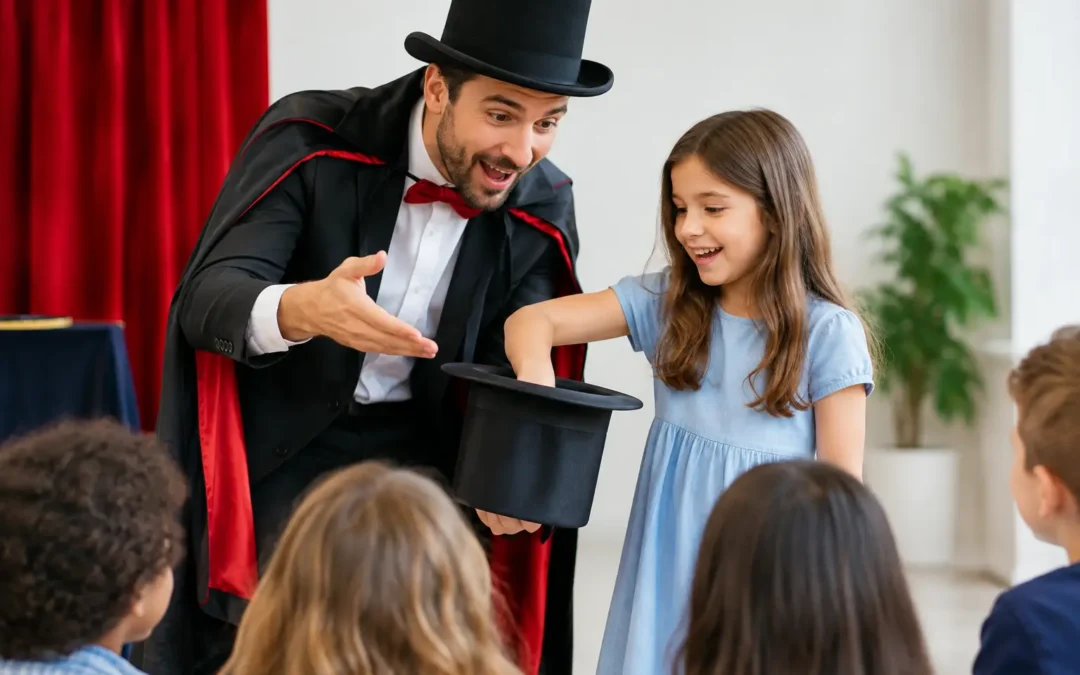
A child is holding the magic wand, the birthday guest is shouting the magic words, and suddenly a silk scarf changes color right in front of everyone. That is the moment parents are hoping for when they ask, what makes magic shows interactive? It is not simply putting a volunteer onstage. It is making every child feel like they helped make the impossible happen.
For a birthday party or family event, interactive magic turns entertainment into an experience the guests share. Kids are not parked in front of a performer waiting for the next trick. They are laughing, guessing, calling out ideas, helping with magical jobs, and watching a friend become the star for a moment. Meanwhile, adults get to enjoy the reactions, take photos, and relax knowing the room is happily engaged.
What Makes Magic Shows Interactive?
A truly interactive magic show invites the audience into the action from the first few minutes. The magician may ask children to choose a color, wave an imaginary wand, make sound effects, or help solve a silly magical problem. Those small moments matter because they give children a reason to pay attention.
The best interaction is not random. It is built into the routine. A child might be needed to keep a secret safe, help find a missing object, or lead the entire group in a funny magic spell. The trick becomes more exciting because the audience has a role in its outcome.
For younger children especially, participation makes a big difference. Their attention naturally moves quickly from one thing to the next. A performer who gets them clapping, answering, laughing, and helping has a much better chance of keeping them connected than someone who performs at them from a distance.
The audience feels seen
At a great children’s magic show, the birthday child is celebrated without putting them under uncomfortable pressure. Other children get chances to participate, too, so no one feels left out. A skilled magician reads the group and knows when to invite an eager helper, when to gently encourage a shy child, and when to keep the whole crowd involved from their seats.
That balance is a real skill. Some kids are ready to race to the front before the first trick begins. Others would rather stay close to a parent and join in by saying the magic words. Both can feel included. Interaction does not have to mean every child standing in front of the group.
Participation Is More Than Picking a Volunteer
A volunteer can make a trick memorable, but a show becomes interactive when the entire room has something to do. Group participation creates energy. When twenty children whisper a magic word, clap a rhythm, or try to spot where a silly object disappeared, they become part of the show together.
That shared anticipation is what makes the reveal land so well. The children are not only watching a bunny appear or a prop change. They feel like their applause, ideas, and magical powers caused it.
Adults often join in, too, especially when the performer uses clean comedy that works on more than one level. A child may giggle at a ridiculous puppet or a funny sound effect, while parents laugh at a quick, good-natured joke. That is one reason interactive magic works so well for family parties: it brings different ages into the same moment instead of splitting the room into bored adults and entertained kids.
Comedy Gives Kids Permission to Join In
Children are more likely to participate when the performer feels friendly, playful, and safe. Comedy breaks the ice. Maybe the magician forgets the magic word, has a conversation with a mischievous prop, or lets a trick go amusingly wrong before the surprise ending.
Kids love being in on the joke. They want to correct the magician, warn them about the sneaky object, and call out the answer they believe the grown-up has missed. That back-and-forth creates a show that feels alive rather than rehearsed.
Of course, the humor has to be age-appropriate. The goal is never to embarrass a child or turn a volunteer into the punchline. The funniest moments happen when the magician laughs with the children and lets them feel clever, capable, and important. Parents appreciate that kind of humor because it keeps the atmosphere light without anyone feeling singled out.
Surprise Creates a Reason to Stay Engaged
Participation gets attention, but surprise keeps it. Children stay curious when they cannot quite predict what will happen next. A picture may move, an ordinary object may transform, or something impossible may appear where no one expected it.
Live animals can add an extra layer of wonder when they are appropriate for the event. Seeing a dove or a bunny is not just a visual surprise. It creates a gentle, excited pause in the room, followed by a flood of questions and delighted reactions. For many children, it becomes the story they tell long after the party is over.
Still, more spectacle is not always the answer. A smaller party in a living room may be better served by close, funny routines that let each child see clearly and participate often. A larger school, church, or community event may need bigger visuals and more group call-and-response. The right level of interaction depends on the age range, group size, space, and event schedule.
Pacing Keeps the Energy From Wandering
Parents know how quickly a room full of excited children can get noisy. An interactive magician does not fight that energy all the time. They direct it.
A well-paced show alternates between big group moments and quieter moments of suspense. After everyone chants a magic word, the magician may slow down and let the audience lean in for a mystery. Then comes a surprise, a laugh, or a child helper’s big finish. That rhythm gives children a chance to release energy without letting the party become chaotic.
The performer also needs to be flexible. If the guests are preschoolers, routines should move quickly with plenty of visual magic and simple instructions. If the group is mostly older elementary-age kids, they may enjoy being challenged to guess how something happened or helping with a more involved effect. A professional does not force one script on every crowd. They adjust while keeping the show organized and fun.
Hands-On Magic Extends the Experience
One of the most meaningful forms of interaction happens after the applause. A beginner magic lesson gives children the chance to learn a simple trick they can perform themselves. Instead of only watching something amazing, they leave feeling like they have a little magic of their own.
This is especially popular for birthday parties because it gives the celebration another memorable activity without creating extra work for the host. Take-home trick bags can keep the excitement going after guests head home. Children can show siblings, grandparents, and friends what they learned, which keeps the party memory alive in a very personal way.
Not every event needs a lesson or favors. A shorter celebration with a packed schedule may be best with a lively performance alone. But when families want a fuller entertainment experience, hands-on magic adds value because it gives guests something to do, learn, and share beyond the show itself.
What Parents Should Look For in an Interactive Magician
A flashy trick is fun, but parents are hiring more than a trick. They are hiring someone to guide the mood of the party. Look for a performer who is comfortable with children, communicates clearly before the event, and understands how to work with the space you have.
Ask how the magician involves the birthday child, whether siblings and guests will get opportunities to participate, and what age range the show is designed for. It also helps to ask about setup needs, performance length, and whether animal appearances or a magic lesson are available. Clear answers make party planning easier.
For Houston families, Magic Lanny brings that warm, high-energy approach to birthday parties, celebrations, schools, and community events. The goal is simple: plenty of laughter, plenty of participation, and a room full of guests who feel like they were part of something special.
When choosing entertainment, picture the moment you want your child to remember. It may be the laugh after a silly mistake, the pride of helping with a trick, or the wide-eyed reaction when the impossible happens. Choose a show that gives them more than a seat in the audience – give them a little magic to make themselves.